
The Most Overlooked Fact About Proxy Sites Revealed
페이지 정보
작성자 Graciela 작성일24-02-22 09:02 조회16회 댓글0건관련링크
본문
A proxy, also known as a proxy can also be referred to by the name of a proxy, is software that functions in the role of intermediaries between a client and server via the internet. Without the proxy, a customer would send a request for any resource directly to the server and servers would deliver any requested resources directly to the client. While this approach is straightforward to grasp and use however, the addition of proxy servers can offer advantages such as more performance, privacy and security, etc. As an additional layer of security proxy servers act as a guardian for the internet between servers and clients.
The general consensus is that the system of hardware for servers, paired with proxy software is often known as proxy servers. However, this article will focus on proxies traditionally defined as software, and specifically in relation to web servers. We will give a synopsis of the two primary types of proxies which are forward proxy and a reverse proxy. Each type has a different use, which could be confusing due to the same name convention.
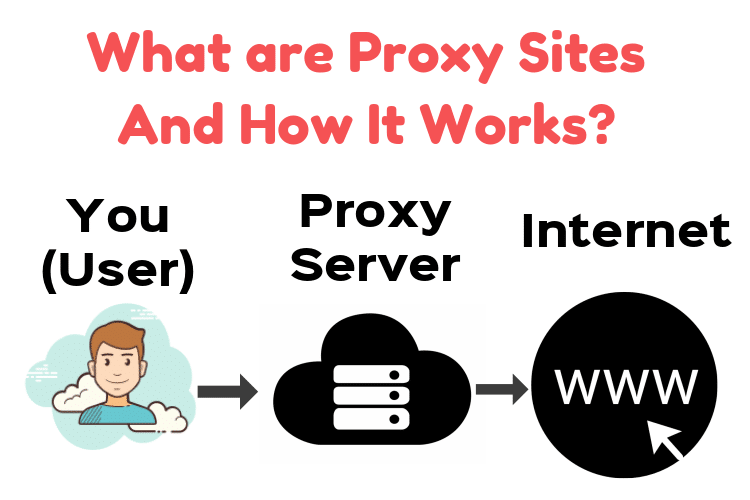
This article will give you an idea of the what proxies and their subtypes, and what they can do for common setups. After reading this article you'll be able recognize the situations where you could benefit by a proxy and determine the best alternative between reverse proxy or forward proxy for any circumstance.
Understanding Forward Proxies
Forward proxy also referred to as an open proxy serves as an agent for users who wish to make a request over the internet to an source server. In this instance, any request sent by the user will be directed via this forward proxy. A forward proxy that is in instead of the user will examine the request. It first decides if the client is legally authorized to accept requests from this specific forward proxy. Then, it will either reject requests or send it back to source server. The client will not be capable of having an internet connection directly; it will only be able to access the information that the forward proxy gives it access to.
A very popular uses for forward proxies is greater security or privacy on the internet. Forward proxy connects to the internet instead of a client's individual account, and may use a different IP address, in contrast to the original IP address of the user.
Based on the way it's set up, and how it is configured forward proxy could provide various options and let you:
Beware of tracking ads.
Circumvent surveillance.
Establish restrictions based upon your location.
Forward proxies can also be used in systems to offer central security and permission based access to the internet, for instance in workplaces. In the event that all internet traffic is routed through a common forward proxy layer administrators are able to restrict access to only certain clients to the internet. This is filtered by an common firewall. Instead of having firewalls for the client layer, which could involve many machines with varying user configurations, firewalls could be placed at the proxy layer that is in front.
Remember that forward proxies must be set up manually for use while reverse proxies could be disregarded by the client. According to the kind of IP address the client, it is transmitted to the server that originated it by the forward proxy privacy and security can be made more transparent.
There are a variety of choices to be considered for forward proxy:
Apache is an well-known open-source web server that provides forward proxy capability.
Nginx is a popular open-source webserver that includes forward proxy capabilities.
Squid is an open forward proxy open source that uses the HTTP protocol. The option does not include the whole web server. We recommend you read our guide on the best method to install Squid proxy to allow private connections on Ubuntu 20.04.
Dante is an forward proxy that utilizes the SOCKS protocol instead of HTTP this allows it to be more suitable for scenarios like peer-to-peer traffic. You can also learn how to setup an Dante proxy to allow secure connections within Ubuntu 20.04
Understanding Reverse Proxies
Reverse proxy is a web server that handles requests from customers on its behalf. This server can serve as a single server or a number of servers. In addition, it could include an application servers, such as Gunicorn. In all of these scenarios the request will be made via the web at large. Most of the time, the request is sent directly to the web server with all the resources the client requires. Reverse proxy acts as an intermediary and separates your website server from communicating with the web's public.
From the point of viewpoint from the perspective of a client, using reverse proxy is not different from connecting to an internet server direct. It's functionally identical, however clients aren't aware of the distinction. The client makes a request for the resource, and it then gets it, with no additional configuration required from the client.
Reverse proxies offer options like:
A central layer of security to protect the server.
The direction of traffic that is based on rules that you can establish.
A new feature for caching is now available.
While central security is a benefit of both reverse and forward proxy solutions, reverse proxies give this feature only to only the server layer and not the client layer. In lieu of the maintenance of firewalls at the server layer which might contain many servers with different configurations, the bulk of firewall security could be directed at the reverse proxy layer. Additionally, removing the burden of interacting with firewalls and interacting with requests from clients outside of web servers allows them to focus on only the requirements of their customers.
If there are multiple servers hosted by reverse proxy it also manages the routing of requests to the servers. There could be multiple web servers serving the same resource, or serving different types of resources or a combination of the two. They may utilize their HTTP protocol as a normal web server, but they could also incorporate application server protocols such as FastCGI. You can set up a reverse proxy to route clients to specific servers according to the requested source, and to adhere to certain rules for traffic load.
Reverse proxies can also make use of their positioning before web servers by providing the ability to cache. Large static files can be set by caching rules to avoid reaching web servers each time a request is made. There are solutions offering the option of serving static content without needing to connect with the webserver at all. Additionally, reverse proxy can handle compressing these assets.
The well-known Nginx web server is a well-known reverse proxy option. Although it is true that the Apache web server does have the ability to reverse proxy as an additional feature that is available to Apache but Nginx was originally designed to and focuses on reverse proxy functionality.
Distinguishing Forward Proxy from Reverse Proxy Use Examples
Because "forward" as well as "reverse" are both associated with an impression of directionality and inaccurate comparisons to "incoming" or "outgoing" traffic and could be confusing because both kinds of proxies process requests and respond. A better approach to differentiate between reverse and forward proxy servers would be to study the requirements of the app that you are building.
Reverse proxy is an important aspect in the design of a solution to serve web-based applications via the internet. They act as your servers during any interaction through the Internet.
Forward proxy is useful to display customers' information for personal use or in a work environment. They represent the client's information when you connect to the internet.
A distinction based on use cases instead of focusing on naming conventions that are similar will help avoid confusion.
Conclusion
In this article, we clarified the meaning of a proxy. There are two types of them being the forward and the reverse proxy. Practical applications and an examination of the beneficial attributes were utilized to determine forward proxies as well as reverse proxy. If you're interested in exploring the role in proxy server, learn how you can configure Nginx as a web server and reverse proxy in Apache on the Ubuntu 20.04 server.
If you liked this write-up and you would certainly such as to receive more info concerning Proxy Sites (https://butik.copiny.com) kindly browse through the web site.
댓글목록
등록된 댓글이 없습니다.